Recent job — East Toowoomba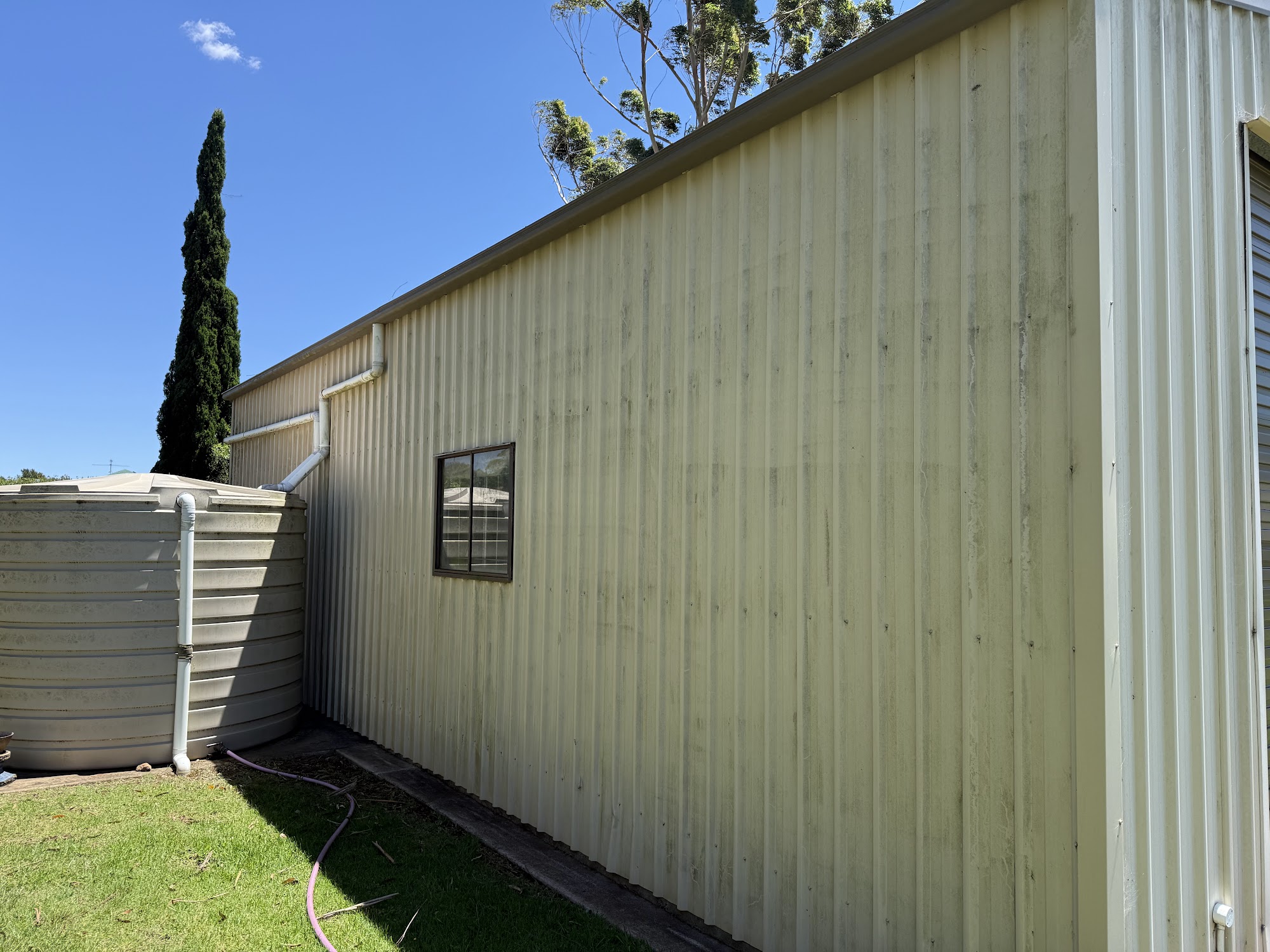
Before & after: recent work
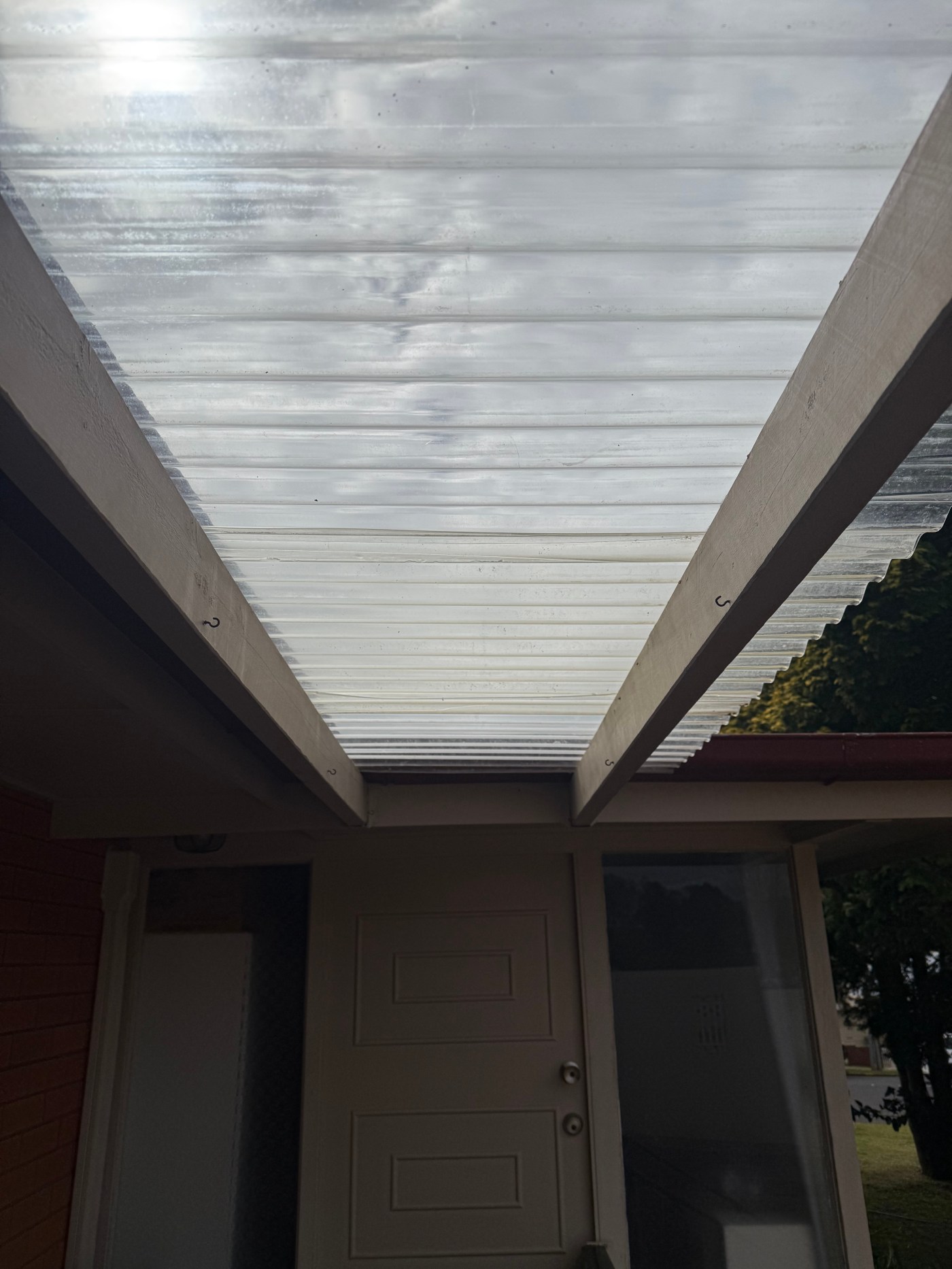
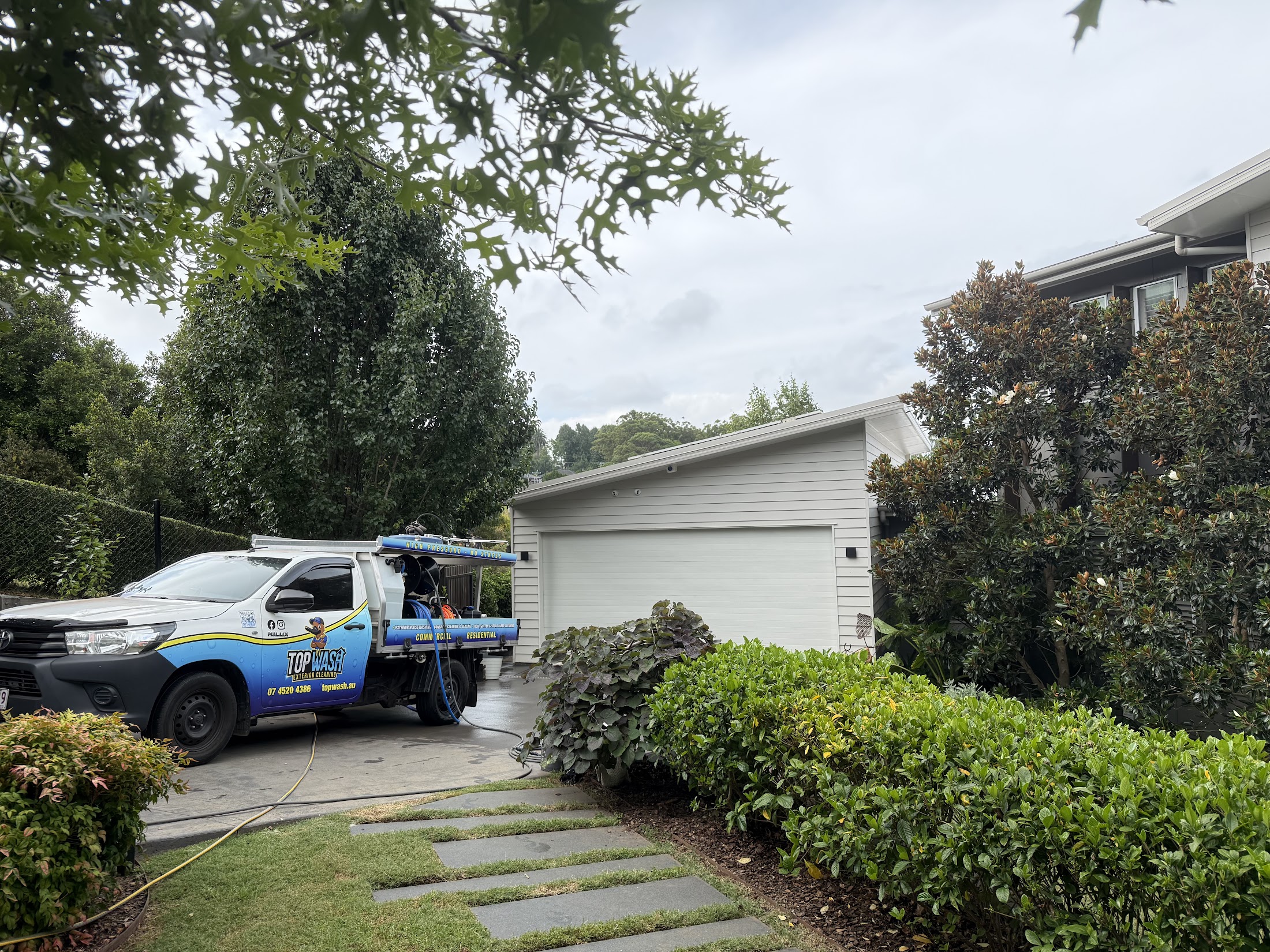
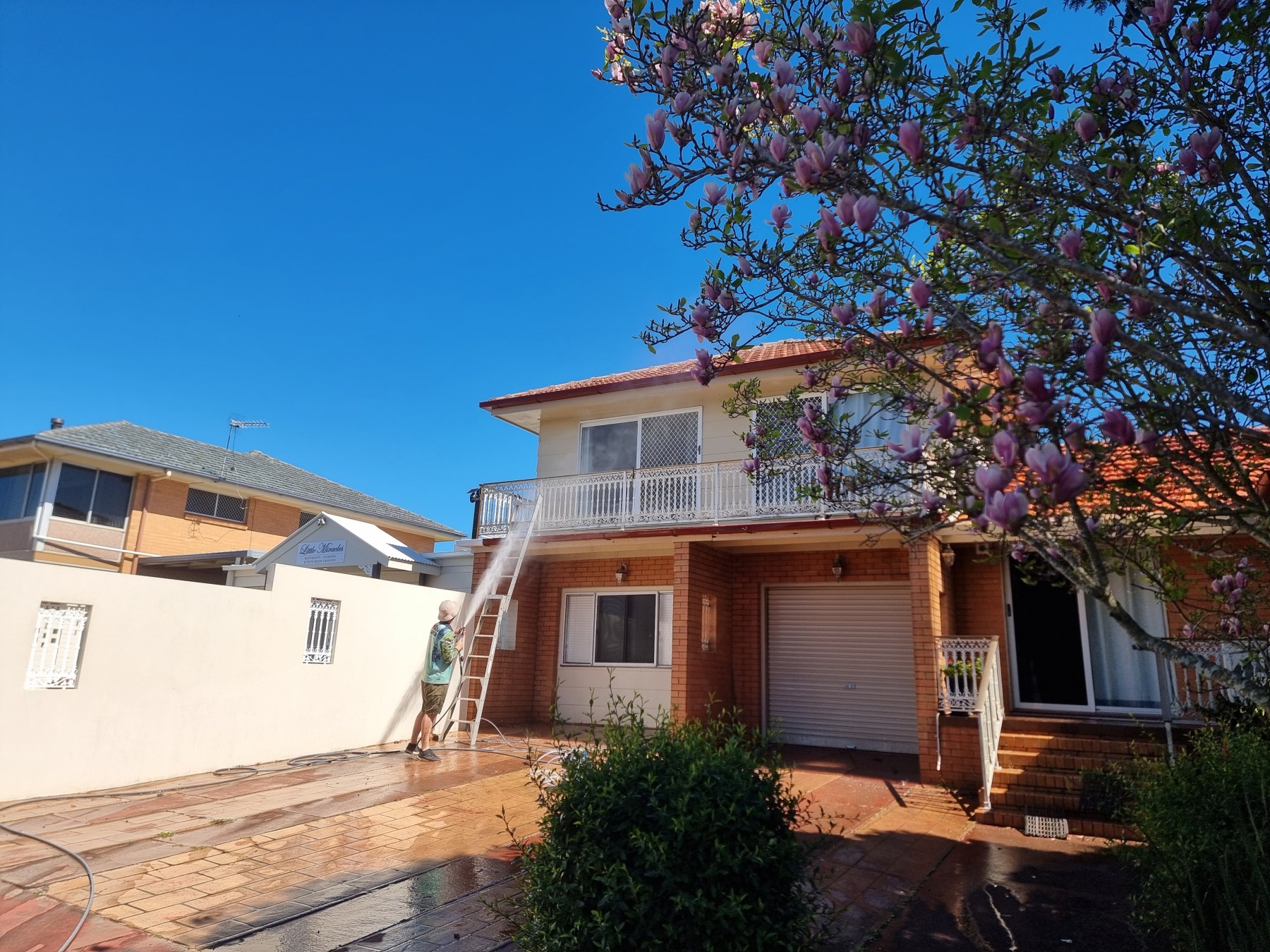
Four stages of a recent East Toowoomba job, from the starting point through to the finished result.
Before
Stage two
Stage three
Stage four
After — a few weeks later
The core principle
Concrete looks solid, but it is not. A slab is full of fine pores, and it draws in whatever lands on it — water, engine oil, tannin from leaf litter, and the red dust that blows across half of Toowoomba.
Toowoomba is harder on concrete than Brisbane is. We sit at about 700m on the Great Dividing Range, so we get fog, heavy dew and cool nights. A slab stays damp for hours after sunrise, and lichen, mould and algae take hold far faster than they do on the coast.
Red Ferrosol is the other half of the problem. That fine iron-rich clay stains concrete orange and soaks into the pores rather than sitting on top, which is why a hose never shifts it.
Sealing closes the pores. Water, oil and staining sit on the surface long enough for you to get to them, and the next driveway cleaning takes a fraction of the work.
Unsealed concrete is not a disaster. But it gets harder to bring back every year, and there is a point where the staining stops coming out at all.
Four stages of a recent East Toowoomba job, from the starting point through to the finished result.
What's included
The two do different jobs. A penetrating sealer soaks into the pores and barely changes the look. A topical sealer sits on top as a film and gives the wet look. Which one suits depends on the surface and how the slab gets used, and we will tell you if the concrete does not need sealing at all.
The eight steps
Preparation decides how the sealer performs. Each step depends on the one before it, and rushing the drying is what ruins most jobs.
Sealer types
Diagnosis
Green or black film that comes back every winter — lichen, mould and algae living on the moisture the fog and dew leave behind. Worst on shaded southern sides.
Orange staining a hose will not shift — red Ferrosol has soaked into the pores. It needs the right chemical treatment, not more pressure.
Dark patches that stay wet long after the rain has stopped — the slab is drinking water. That is open, unsealed concrete.
Milky white blotches under a shiny coating — a topical sealer went down on a damp slab. The moisture is trapped under the film and the only fix is stripping it back.
Wheel tracks duller than the rest of the drive — a topical sealer has worn through where the tyres sit. Usual at around the three to five year mark.
Faded stencilcrete or washed-out colour — the colour layer is exposed and going. Worth sealing now, because once it wears off it does not come back.
Timing
Warm days, lower humidity and a reasonable chance of a dry run. Easy to get the 24 to 48 hours of dry slab that sealing needs.
Concrete dries fast, which helps. The catch is the afternoon storms. A shower on fresh sealer will mark it, so we watch the forecast and schedule around it.
Often the most settled weather we get up here. Worth clearing leaf litter off the slab first, because tannin staining starts within weeks of wet leaves sitting on bare concrete.
At 700m the fog and heavy dew mean a slab may never fully dry, and the cold slows the cure. Cleaning is fine through winter. Sealing usually waits for a settled stretch.
If someone offers to clean and seal your driveway on the same day, the slab will not be dry. That is a scheduling convenience for them, not a decision made for your concrete.
Worth knowing
If the slab is badly cracked or lifting, sealing is money wasted. Reactive clay soils across parts of the Downs move with moisture, and concrete laid on them moves too. Sealer will not hold a slab together.
If the stain will not come out, think about it first. Sealing locks in whatever is on the surface on the day. We would rather tell you a mark is permanent than seal over it and have you find out in two years.
If it was sealed a year or two ago and still looks right, leave it. Recoating a penetrating sealer early achieves nothing. We will tell you to wait rather than sell you a coat you do not need.
Where it clearly does pay off is before a house sale. The driveway is in every listing photo, and a clean, evenly sealed slab reads as a maintained house. Ring 0490 397 740 and we can usually quote from photos.
Why us for this work
Sealer matched to the surface — plain, exposed aggregate, stencilcrete and coloured concrete all behave differently. We tell you which product we would use and why.
We will not seal a damp slab — 24 to 48 hours of drying, longer after fog or in cold weather. If conditions will not allow it, we come back another day.
$20 million public liability insurance — Working at Heights certified, White Card, police-checked crew, and a signed SWMS on every site.
Runoff handled properly — Toowoomba Regional Council regulates what enters the stormwater system, so washdown water is contained and managed on site rather than left to find the nearest drain.
We quote the job, not an hourly rate — you know the figure before we start. Photos are usually enough for a quote, so ring 0490 397 740 or send them through.
Family-owned and based here — we work about 35km around Toowoomba, including Highfields, Westbrook, Oakey, Gatton, Cambooya, Hampton, Withcott, Kingsthorpe, Meringandan, Cabarlah, Wyreema, Helidon, Murphys Creek and Gowrie Junction.
Common questions
Because bare concrete is a sponge. It has an open pore structure that draws in water, oil, tannin from leaf litter and — in Toowoomba specifically — red Ferrosol soil. A sealer closes or coats those pores so the staining sits on top where it can be swept or hosed off. It is the difference between cleaning a driveway every year and cleaning it every four or five.
A penetrating sealer soaks in and works from inside the pores. It changes the look very little, does not peel, and is the safer choice on a driveway that sees sun and tyres. A topical sealer sits on the surface as a film, gives the wet-look or gloss finish people often want on exposed aggregate and stencilcrete, and enriches colour, but it wears in the tyre tracks and eventually needs stripping and redoing. We recommend based on your surface and how you use it, not on which one is easier to sell.
A penetrating sealer on a residential Toowoomba driveway is typically four to seven years. A topical sealer is usually three to five and shows its age sooner in the wheel tracks. Shade, tree cover and how much traffic the slab takes all move those numbers.
Always, and properly. Sealing over a stained slab seals the stain in permanently, and sealing over a damp slab traps moisture and turns the sealer milky white. That blotchy white bloom you see on driveways around town is almost always someone sealing too soon. We clean, then wait for the slab to dry, usually 24 to 48 hours in Toowoomba weather, then seal.
A penetrating sealer does not change the surface texture, so no. A high-gloss topical sealer can be slick when wet, which is why we supply it with a fine anti-slip grit additive on any surface where that matters: steep driveways, pool surrounds, entries and commercial walkways.
Yes, and both are good candidates. Exposed aggregate is especially porous, and sealing brings the stone colour back up as well as protecting it. Stencilcrete relies on a surface colour layer that fades badly without a sealer, so re-sealing is genuinely restorative there rather than cosmetic.
Usually. Failed topical sealer needs to be stripped rather than sealed over, because a new coat over a flaking one will lift with it. We will tell you honestly whether it is a strip-and-redo or whether a clean and re-coat will hold. Nobody enjoys hearing the first answer, but it saves paying twice.
Foot traffic is usually fine after a few hours and vehicles after 24 to 48 hours, depending on the product and the weather. We will give you exact times for the sealer used on your job, and it is worth planning around rather than guessing.
It is one of the highest-return jobs on a property before sale, because the driveway is the first thing in the photos and the first thing anyone walks on at an open home. Clean and sealed concrete reads as a well-maintained house before a buyer has looked at anything else.
$20 million public liability, police-checked crew, Working at Heights certification and a signed safe work method statement on every site. Certificates of currency are available on request. No other exterior cleaning business in Toowoomba publishes a cover figure. See our compliance documents, or call 0490 397 740.
Not sure which sealer suits your concrete? Book a free assessment →
Pricing
Every job is quoted on the concrete in front of us, on site or from photos you send through. A fixed price for the job, never an hourly rate. If the slab only needs a wash, we will quote it as pressure cleaning and say so.
Get in touch
Send a few photos of the driveway, path or patio and we will tell you what it needs, what it will cost, and whether sealing is worth doing yet.
After a wash rather than a full seal? see pressure cleaning →